P6 English · Paper 4

Oral is 20% of the grade. Most children never practise it.

Forty marks out of two hundred — fifteen for reading aloud, twenty-five for the conversation. And almost all of it is prepared by reading to a parent who is halfway through cooking dinner, then hearing “good, well done”.

Get P6 Oral — S$60 → See inside first
15marks · reading aloud
25marks · conversation
20%of the English grade
What is in it

Both halves of the paper, prepared properly

Oral is two separate skills marked on two separate scales. They need different practice, so they get it.

🎙️ Reading aloud · 15 marks

Ten passages, written to exam shape

Each one carries the features an examiner listens for — a question and an exclamation for expression, long sentences against short for rhythm, and the consonant clusters children trip on.

  • The trickier or longer words highlighted, so your child knows where to slow down
  • A line telling them how it should sound — calm while the park is empty, brighter as the joggers arrive
  • A model reading to listen to before they try it themselves
  • Record, play it back, and hear what they actually said rather than what they meant to say
💬 Conversation · 25 marks

Ten photographs, forty questions

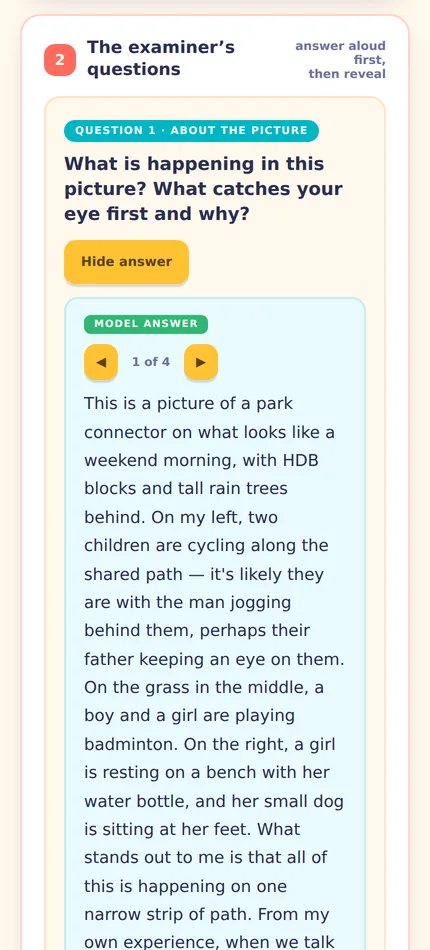
Since the 2025 format change the stimulus is a real photograph, and the examiner works through four questions of widening scope. That is where children run dry — they can describe a picture, then have nothing left for questions three and four.

  • The five-minute preparation window, timed exactly as the real thing
  • All four questions for every photograph, in the examiner's own order
  • A model answer for each one — answer aloud first, then reveal
  • Vocabulary worth borrowing, listed with each stimulus
The examiner's four questions

They widen on purpose

Each one asks for something the last did not. A child who only knows how to describe the photo has already run out by question three.

1The pictureWhat is happening, and what catches your eye first
2Your experienceHave you done this? When, and what was it like
3Your opinionWhat do you think about it, and why
4Go furtherExtend it — what would you change, what else matters
The band ladder

What one rung better actually sounds like

Every one of the forty questions is answered at all five bands. Not a rubric describing a good answer — the answer itself, spoken.

“What do you do to keep fit or active? Tell me about it.”
1
“I cycle.” Answers the question. Stops the moment it has.
5
“I cycle with my father on Saturday mornings, along the park connector near our block. I like it because it doesn’t really feel like exercise — we just talk and pedal, and before I know it we’ve gone quite far…” A reason, a real moment, and what it changed — each rung adds one move.
See inside

Real screens, not mock-ups

Taken from the live app on a phone.
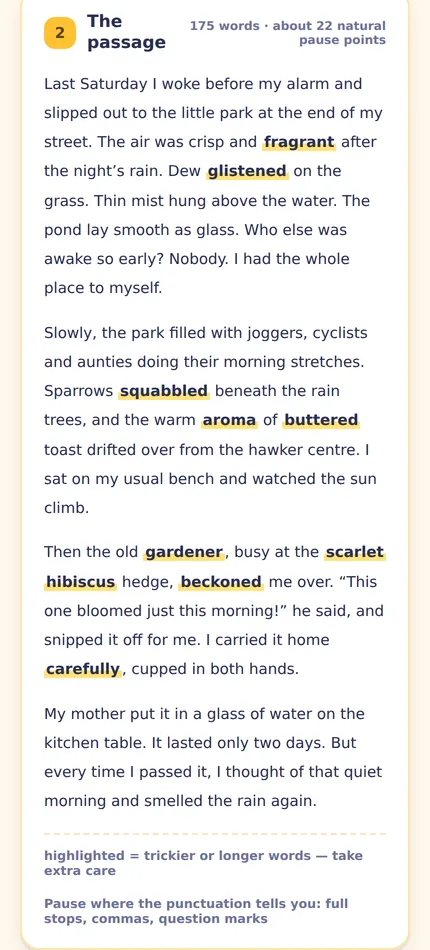
A P6 Oral reading-aloud passage with the trickier words highlighted, showing the word count and number of natural pause points.
A reading passage175 words, with fragrant, glistened, squabbled and hibiscus marked as the ones to take care over — and a reminder to pause where the punctuation tells you to.
The examiner's four questions on a photograph stimulus, with the model answer revealed for question one of four.
The model answerQuestion 1 of 4, with the five-minute preparation timer above it. Your child answers aloud first, then reveals what a top answer sounds like — spatial, hedged, and honest rather than polished.

P6 Oral

S$60

12 months · one payment · no card stored

Ten reading passages, ten photograph stimuli, forty questions, every one answered at all five bands. Included free in both bundles, and the 2026 material is added at no extra cost when it lands in September.

Get P6 Oral →
Or take it with the papers — see the bundles